BAHASA INDONESIA FOR EXPATS
Moving, Working, and Living in Indonesia
Moving, working, and living in Indonesia offers an extraordinary lifestyle—from the vibrant creative hubs of Canggu and Ubud to the bustling metropolis of Jakarta. However, navigating Indonesian bureaucratic compliance, immigration laws, and tax regulations requires total clarity. Following recent local crackdowns on illegal working, visa abuse, and property leasehold scams, understanding how to remain 100% compliant is essential for any expat, digital nomad, or retiree.
This master legal guide breaks down everything you need to know about legally entering, staying, working, and setting up your life in the Republic of Indonesia.
1. Navigating Visas and Entry Requirements
Before setting foot in the archipelago, you must select the correct immigration pathway matching your true intent.
Digital Entry Declarations: The All Indonesia App
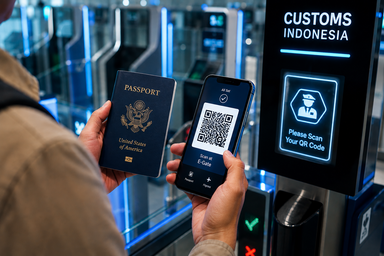
All international travelers entering via major hubs (such as Soekarno-Hatta in Jakarta or Ngurah Rai in Bali) must complete the mandatory All Indonesia App prior to departure. This digital platform consolidates your immigration details, health declaration, and customs electronic declaration (e-CD) into a single QR code presented at check-in and border control.
Tourist & Short-Term Visit Visas (e-VOA / B211A / Visit Visa C1)
- e-VOA (Visa on Arrival): Valid for 30 days, renewable once for an additional 30 days online via the official Indonesian Immigration Portal. Strictly for tourism, family visits, and attending business meetings.
- Visit Visa C1 / B211A: A single-entry 60-day visit visa, extendable twice for 60 days each (up to 180 days total). Applicants must provide proof of funds (a 3-month bank statement showing a minimum balance of $2,000 USD).
Crucial Rule: You cannot perform local work, earn income from Indonesian sources, or sell products/services within Indonesia under a tourist or visit visa.
The E33G Remote Worker Visa (KITAS for Digital Nomads)
For remote employees, freelancers, and digital nomads employed by companies outside Indonesia, the E33G Remote Worker KITAS is the designated legal pathway.
- Duration: 1 Year (renewable).
- Income Requirement: Proof of an employment contract with a foreign company and annual earnings of at least $60,000 USD.
- Bank Proof: 3 months of bank statements showing a consistent monthly salary deposit and a minimum balance of $2,000 USD.
- Permitted Activities: Working remotely for your foreign employer.
- Strict Prohibitions: Engaging in work for local Indonesian companies or receiving payment from Indonesian entities.
Work KITAS (E23 Series) & Golden Visas
If you plan to be employed locally by an Indonesian PT PMA (foreign-owned company) or set up your own business, you must secure an E23 Work KITAS sponsored by that entity. High-net-worth investors and retirees can also explore Golden Visas (5–10 years) through capital investment or state bank deposits.
2. Remote Work & Tax Residency Laws
One of the biggest pitfalls when moving, working, and living in Indonesia is misunderstanding tax compliance.
The 183-Day Rule
Under Indonesian tax law (UU Harmonisasi Peraturan Perpajakan), any foreign individual who spends more than 183 days within a 12-month period in Indonesia is classified as a Domestic Tax Resident (Wajib Pajak Dalam Negeri).
Worldwide Income vs. Territorial Taxation
- Tax Identification Number (NPWP): Tax residents are legally required to register for an NPWP through the Directorate General of Taxes (DJP).
- Double Taxation Agreements (DTA): Indonesia maintains active DTAs with over 70 countries (including the US, UK, Australia, Canada, and EU member states) to prevent dual taxation. You must declare foreign earnings, but credits for tax paid in your home country are applied based on the relevant tax treaty.
3. Renting & Leasing Property Legally
Foreigners cannot hold Hak Milik (Freehold Title) over land in Indonesia—this title is strictly reserved for Indonesian citizens (WNI).
| Lease Type / Ownership Title | Legal Description | Ideal For |
|---|---|---|
| Sewa (Short-Term Rental) | Standard rental agreements for months or short terms under local contracts. | Digital Nomads & Initial Settlers |
| Hak Sewa / Leasehold | Long-term lease rights (typically 25–30 years) registered legally via a Notaris/PPAT. | Long-term expats & Villa Lessees |
| Hak Pakai (Right to Use) | Official property title issued over land directly to foreign KITAS/KITAP holders. | High-value residential purchases |
Avoiding Property Scams
- Avoid Nominee Agreements: "Nominee structures"—where a foreign expat pays an Indonesian citizen to buy freehold land on their behalf—are legally invalid under Indonesian Agrarian Law. In legal disputes, courts consistently strip rights from foreign investors using nominee arrangements.
- Always Use an Official Notary (PPAT): Ensure land certificates, building permits (PBG/SLF), zoning regulations (ITR), and tax clearances are independently verified by an accredited public notary (Pejabat Pembuat Akta Tanah) before transferring funds.
4. Local Compliance: IDP, SIM C, IMEI, and Regional Rules
Living in Indonesia legally extends beyond your visa page—it requires compliance on the ground in daily life.
Driving Legally: IDP vs. SIM C
- International Driving Permit (IDP): To drive a scooter or car legally, you must carry a valid IDP issued in your home country corresponding to the specific vehicle category (Class A for motorcycles), alongside your home country's driver's license.
- Local SIM (Surat Izin Mengemudi): KITAS holders can apply for a local SIM C (for motorcycles) or SIM A (for motor vehicles) at local police headquarters (Polres).
- Consequences: Driving without a proper permit or without a helmet leads to impoundment, fines, and potential immigration flags.
Registering Your Phone’s IMEI
Foreign mobile devices brought into Indonesia will have their cellular network connectivity blocked after 90 days unless registered with Indonesian Customs (Bea Cukai).
- How to Register: Complete the online IMEI form on the official Bea Cukai Portal prior to landing.
- Customs Clearance: Present the QR code at airport customs. Devices valued under $500 USD are exempt from import duty taxes. Devices over $500 USD incur standard import duties and income taxes (PPN/PPH).
Regional Requirements: Bali Tourist Levy & Banjar Registration
- Bali Tourism Levy: Foreign visitors entering Bali must pay the mandatory IDR 150,000 tourist levy via the official Love Bali Portal to support cultural preservation and infrastructure.
- Neighbourhood Registration (Banjar / RT / RW): When renting long-term accommodation, inform your landlord or villa manager to register your stay with the local neighborhood council (Banjar in Bali, or RT/RW in Java and other islands).
5. Summary Checklist for Moving to Indonesia Legally
- Select the Right Visa: Secure an e-VOA, B211A/C1, or E33G Remote Worker Visa depending on your work model.
- Complete Digital Arrivals: Submit the mandatory All Indonesia App declaration.
- Declare Mobile IMEI: Register foreign phones at customs upon arrival.
- Secure Driving Credentials: Carry a valid IDP or obtain an Indonesian SIM C/A license.
- Verify Lease Contracts: Formalize leasehold agreements through a licensed Notaris/PPAT.
- Track Residency Days: Monitor your total physical stay in-country to remain compliant with national tax thresholds.
Master the Language and Culture with Language Support
Living smoothly in Indonesia requires more than legal paperwork—it takes open communication and genuine respect for local culture.
At Bahasa Indonesia for Expats, we offer structured courses designed for foreign professionals, digital nomads, and travelers looking to settle in Indonesia with confidence.
Want to learn practical Indonesian, navigate local etiquette, and connect with a community of expats living the right way? Join our Interactive Online Community Class—an affordable, engaging, and practical live language program built for your daily life in Indonesia!